
Laparoscopic hernia repair uses small keyhole incisions and generally offers faster recovery and less pain than open surgery, while open repair remains the better choice for certain large, complex, or recurrent hernias. The right option depends on the hernia’s size, location, and your individual surgical history, which is why this decision should be made with your surgeon rather than by preference alone.
You have noticed a bulge that was not there before, maybe uncomfortable when lifting or straining, and now you have a hernia diagnosis and a decision to make about which type of repair to have. The terms “open” and “laparoscopic” get thrown around without much explanation of what actually determines which one is right for you.
Dr Sami Salem Ahmad walks patients through exactly this decision regularly, since choosing the right approach depends on specifics of your hernia rather than a one-size-fits-all answer. This article explains how each approach works and what genuinely determines which is better for your situation.
Both Approaches Repair the Same Underlying Problem Differently
A hernia occurs when tissue pushes through a weak spot in the abdominal wall muscle, and repair involves pushing that tissue back and reinforcing the weak area, usually with a surgical mesh. Open repair does this through a single larger incision directly over the hernia, while laparoscopic repair achieves the same reinforcement through several small incisions using a camera and slim instruments.
Both approaches are well-established and effective when performed appropriately for the right hernia type, and neither is universally “better,” despite what general online searches often suggest.
Laparoscopic Repair Generally Means an Easier Recovery
Smaller incisions typically translate into less pain after surgery, a lower risk of wound infection, and a faster return to normal activity, often within one to two weeks compared to two to four weeks for open repair. This makes laparoscopic repair the preferred approach for many straightforward inguinal and smaller abdominal wall hernias.
Laparoscopic repair is also particularly useful when hernias occur on both sides of the body, since both can often be repaired through the same small incisions in a single operation.
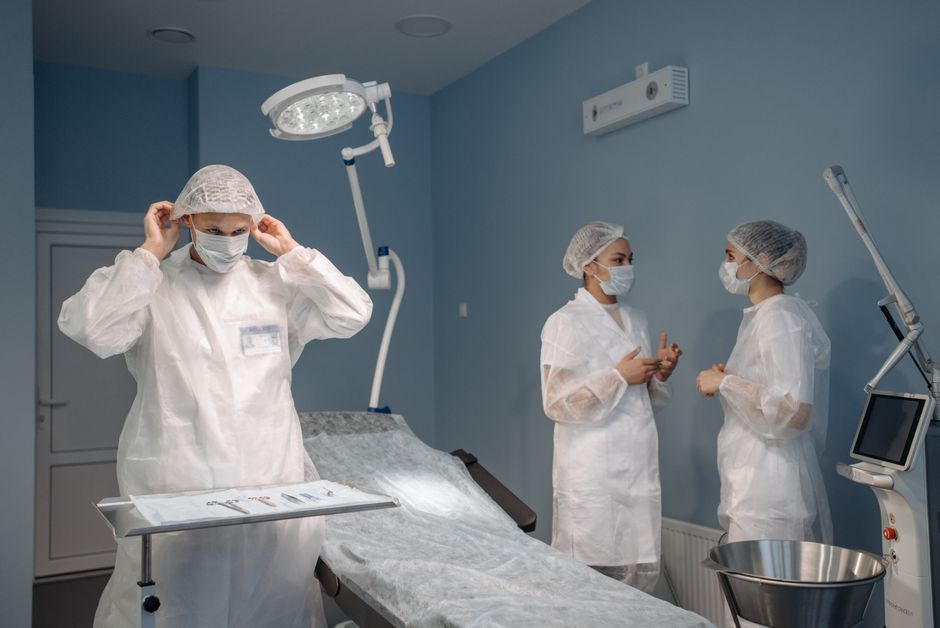
Open Repair Remains the Better Choice for Certain Cases
Very large hernias, hernias that have recurred after a previous repair, or cases with significant scar tissue from prior abdominal surgery are often better suited to open repair, where the surgeon has more direct visual and physical access to the affected area. Certain complex hernias also carry higher risk with a laparoscopic approach specifically because of these anatomical complications.
Patients who cannot safely tolerate the gas used to inflate the abdomen during laparoscopic surgery, due to certain heart or lung conditions, may also be better candidates for open repair for this specific medical reason.
The Right Choice Comes From Imaging and an Honest Assessment, Not Preference Alone
Before recommending an approach, Dr Sami Salem Ahmad reviews the size and location of the hernia, whether it is a first occurrence or a recurrence, and your general health and previous surgical history. This assessment, sometimes supported by imaging, determines which approach offers the safest and most durable repair for your specific case.
Patients are often surprised to learn that “less invasive” does not automatically mean “better” for every hernia, and a good surgeon recommends based on your anatomy rather than defaulting to whichever technique is more commonly marketed.

[TABLE]
| Factor | Laparoscopic | Open |
|---|---|---|
| Recovery time | 1-2 weeks | 2-4 weeks |
| Best for | Straightforward, bilateral hernias | Large, recurrent, complex hernias |
| Incision size | Several small incisions | One larger incision |
| Infection risk | Generally lower | Slightly higher |
If you have been diagnosed with a hernia and are unsure which repair approach is right for you, Dr Sami Salem Ahmad can assess your specific case and recommend the safest, most durable option. Visit drsami-clinic.com to book a consultation.
Which type of hernia repair has a lower chance of the hernia coming back?
Recurrence rates are generally similar between the two approaches when performed appropriately for the right hernia type and with proper mesh reinforcement. Choosing the wrong approach for a given hernia, rather than laparoscopic versus open in general, is the bigger factor in recurrence risk.
Will I need mesh either way, and is mesh safe?
Most hernia repairs, whether open or laparoscopic, use surgical mesh to reinforce the weakened area and reduce recurrence risk. Modern surgical mesh has an extensive safety record, and Dr Sami Salem Ahmad will discuss the specific type appropriate for your case.
Can I choose laparoscopic repair even if my surgeon recommends open surgery?
This decision should be made together with your surgeon based on your specific hernia characteristics, since choosing an approach that is not well suited to your anatomy can increase complication or recurrence risk. It is always worth understanding the specific reasoning behind your surgeon’s recommendation.
How long can I safely wait before having hernia surgery?
Some hernias can be monitored for a period if they are small and not causing significant symptoms, but a hernia that becomes painful, enlarges, or cannot be pushed back in needs prompt evaluation, since a trapped hernia is a surgical emergency. Dr Sami Clinic can assess how urgently your specific hernia needs attention.
Am I too old for hernia repair surgery?
Age alone rarely rules out hernia repair, though overall fitness for anaesthesia is assessed individually. Many patients in their seventies and eighties have this surgery safely once cleared on general health grounds.
What does the first appointment with Dr Sami involve for a suspected hernia?
The first visit includes a physical examination of the hernia, a discussion of your symptoms and history, and imaging if needed to fully assess its size and location. Dr Sami Salem Ahmad then explains which repair approach is most appropriate and why.
Dr. Sami Salem Ahmad
FRCS, Dr Sami Clinic
Dr. Sami Salem Ahmad is a consultant surgeon with over 31 years of experience in general and metabolic surgery. He has practiced in Amman and Stuttgart and leads Dr Sami Clinic with a focus on safe, effective surgical care and long-term patient health. He holds the FRCS and has helped hundreds of patients through surgical and non-surgical treatment.
The information in this article is for educational purposes only and does not constitute medical advice. It should not be used to self-diagnose or replace a consultation with a qualified surgeon. If you have questions about your health or suitability for surgery, contact a licensed medical professional. For consultations with Dr Sami Salem Ahmad, visit drsami-clinic.com.